
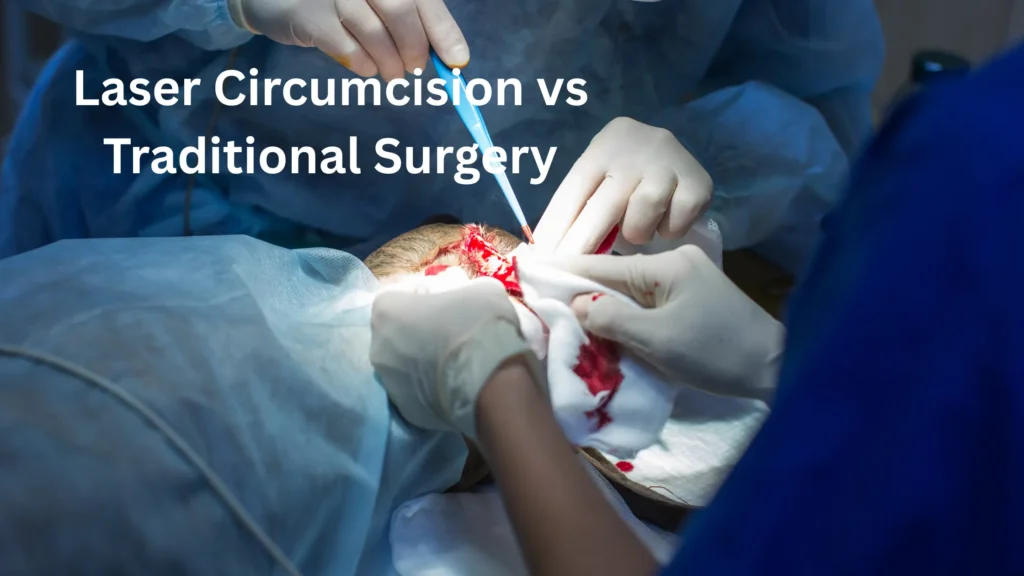
Laser circumcision and traditional scalpel surgery both work effectively, each with distinct advantages. Laser offers minimal bleeding and reduced pain, whilst traditional surgery provides excellent results and lower costs.
Choice depends on surgeon expertise, facility capabilities, and personal recovery preferences.
How Laser Circumcision Works
Laser circumcision uses concentrated light energy to cut tissue and seal blood vessels simultaneously. This precision minimises tissue damage. The thermal energy cauterises blood vessels as it cuts, reducing bleeding significantly.
CO2 and diode lasers have proven safety records in clinical settings according to studies published in the British Journal of Urology International.
How Traditional Scalpel Surgery Works
Traditional circumcision removes the foreskin using a surgical scalpel or scissors. The surgeon manually controls bleeding using pressure, sutures, or cautery. This refined technique produces excellent cosmetic outcomes in experienced hands.
Laser Circumcision Advantages
Minimal Bleeding
Laser energy seals blood vessels during cutting. Post-operative bleeding complications are significantly reduced. The clear surgical field improves visibility throughout the procedure.
Reduced Post-Operative Pain
Laser procedures cause less tissue trauma than scalpel surgery. Patients require less pain medication and return to normal comfort levels faster. Most patients need minimal analgesia by day 3.
Faster Healing
Recovery to full activity takes 10 to 14 days with laser versus 3 to 4 weeks for traditional surgery. Precise cutting and minimal tissue damage promote faster regeneration.
According to the Royal College of Surgeons, modern laser techniques reduce healing time significantly.
Lower Infection Risk
Sealed blood vessels and clean margins reduce bacterial colonisation. Laser shows infection rates of 0.1% to 0.2% compared to 0.3% to 0.5% for traditional methods, according to data from the NHS and academic surgical literature.
Superior Cosmetic Results
Clean tissue margins with minimal scarring produce excellent appearance. The fine laser beam creates even, straight cuts that heal with minimal scar visibility. For patients concerned with appearance, laser circumcision by choosing the right doctor delivers superior results.
Laser Circumcision Disadvantages
Equipment Cost
Laser systems cost £30,000 to £100,000, limiting clinic availability. Higher costs mean fewer providers and premium pricing. Geographic access remains limited in most areas.
Operator Skill Requirements
Laser circumcision requires specific training. Improper settings cause thermal damage or inadequate haemostasis.The learning curve is steeper than traditional surgery.
Limited Availability
Most NHS hospitals don’t have laser equipment. Private clinics exclusively offer laser circumcision, making this option geographically and financially restricted. Rural patients have no local access.
Not Suitable for Newborns
Laser works best in older infants and adults. Newborns present technical challenges due to their small size. Traditional surgery remains standard for neonatal circumcision.
Traditional Surgery Advantages
Universal Availability
Every hospital and clinic performs traditional circumcision with basic instruments. No special equipment requirements ensure accessibility throughout the NHS and all private clinics. This makes traditional surgery the default option for most patients.
Excellent Cosmetic Outcomes
Traditional surgery by skilled surgeons produces beautiful results. Symmetrical, well-healed circumcisions with minimal scarring are the standard. Surgeons can customise tissue removal for individual anatomy.
Proven Track Record
Centuries of refinement mean techniques are extremely well-understood. Complication rates are well-documented with extensive safety data. Surgeons worldwide have deep experience managing variations.
Suitable for All Ages
Traditional circumcision works equally in newborns, infants, children, and adults. No age limitations make this the only viable option for neonatal circumcision. The technique adapts to anatomical variations at any age.
Lower Cost
Traditional surgery requires only basic instruments. This translates to lower procedure fees, with traditional circumcision costing 20% to 30% less than laser options. According to NHS pricing data, cost savings are substantial for private patients.
Traditional Surgery Disadvantages
Bleeding Management Challenges
Surgeons must manually control bleeding using pressure, cautery, or sutures, taking additional time. Some bleeding is inevitable, and swelling after circumcision can be more pronounced. Post-operative bleeding occurs more frequently than with lasers.
Increased Post-Operative Pain
Tissue trauma from cutting creates more inflammation. Patients require stronger pain medication and experience discomfort longer. Sleep disruption is common during the first week.
Longer Recovery Period
Most patients need 3 to 4 weeks to return to normal activities. Healing is complete by 4 to 6 weeks. Extended recovery affects work schedules and physical activities.
Higher Infection Rates
Traditional surgery shows infection rates of 0.3% to 0.5%, roughly double the laser rate. Open vessels and tissue margins provide bacterial entry points. Increased inflammation creates a hospitable environment for infection.
Quick Comparison
| Factor | Laser | Traditional |
| Bleeding | Minimal | Moderate |
| Post-Op Pain | Minimal | Mild-Moderate |
| Infection Rate | 0.1-0.2% | 0.3-0.5% |
| Full Recovery | 10-14 days | 21-28 days |
| Cost | £800-£1,500 | £395-£800 |
| Availability | Private only | NHS & Private |
| Suitable for Newborns | No | Yes |
| Cosmetic Outcome | Excellent | Excellent |
| Surgeon Availability | Limited | Widespread |
Anaesthetic Used
Laser procedures often use local anaesthetic in patients under 8 weeks due to reduced trauma. General anaesthetic is standard for older infants and all children with both methods. Adults may choose local with sedation or general anaesthetic regardless of technique.
Recovery Comparison
First Week
Laser patients experience minimal discomfort after day 2, whilst traditional patients have moderate discomfort through day 7. Laser allows return to light activities by day 3 to 4. Traditional patients need rest through day 7.
Weeks 2-4
Laser patients return to full activity by week 2. Traditional patients typically need 3 to 4 weeks. Using the CircCurer stapler technique provides middle-ground recovery times.
Long-Term Healing
Both methods achieve identical results by 6 weeks. Laser’s faster recovery reflects less tissue trauma, not faster actual healing.
Cost Analysis
Private Laser Circumcision
Laser procedures cost £800 to £1,500 depending on age and location. Higher costs reflect expensive equipment and specialist training. London clinics charge more due to facility costs.
Private Traditional Surgery
Traditional circumcision ranges from £395 to £800. Lower costs reflect basic equipment needs. The Amin CircCurer technique positions between traditional and laser pricing.
NHS Availability
The NHS provides both methods free to eligible patients. Laser availability is extremely limited, with most referrals receiving traditional surgery. According to NHS England data, laser equipment remains unavailable at most hospital trusts.
Which Method Is Best?
Laser Best For
- Adults prioritising minimal recovery time
- Those able to access and afford laser services
- High pain sensitivity individuals
- Work requiring rapid return
- Clinics with experienced laser operators
Traditional Best For
- Newborns and infants under 8 weeks
- NHS treatment patients
- Cost-conscious individuals
- Those without local laser access
- Patients wanting proven long-term data
Choosing Your Method
Choose based on surgeon expertise, not method technology alone. A skilled traditional surgeon outperforms an inexperienced laser operator. How long circumcision takes to heal varies by method, so understand realistic recovery timelines.
Key Decision Factors
- Identify your priority: pain, recovery speed, cost, or cosmetics
- Verify available options in your area
- Research surgeon credentials and experience
- Discuss complication management arrangements
- Understand pricing and what’s included
- Ask about alternatives if first choice unavailable
Modern Approaches
CircCurer Stapler Technique
The stapler device combines the advantages of traditional and laser methods. Improved haemostasis and reduced trauma bridge the gap between both techniques. This modern advancement remains accessible and affordable compared to lasers.
Combination Approaches
Experienced surgeons sometimes combine lasers for tissue removal with traditional techniques for specific management. These hybrid approaches leverage benefits of both methods. However, they require exceptional expertise and limited availability.
Complications and Safety
Both methods show excellent safety profiles in experienced hands. Laser complications remain below 0.5% when performed by trained surgeons, with serious complications in fewer than 0.1%. Traditional surgery shows 0.5% to 1% complication rates in specialist hands. Neither method produces consistently more severe complications.
Research from the British Medical Association and NHS England confirms both techniques are safe when performed properly. Surgeon expertise matters more than equipment choice when assessing safety outcomes.
Patient Satisfaction
Studies show high satisfaction with both methods. Laser patients rate pain management higher, whilst traditional surgery patients rate cost-effectiveness and accessibility higher. Satisfaction levels are equivalent despite different factors driving satisfaction. Recovery preference differences don’t significantly affect long-term satisfaction ratings.
Making Your Final Decision
- Confirm available options in your area
- Prioritise your most important outcome
- Verify surgeon credentials and experience
- Understand realistic recovery timeline
- Discuss complication management
- Confirm all-inclusive pricing
- Ask about alternatives
At Circumcision Pro, we offer both traditional and modern stapler techniques. Dr Ruhul Amin’s experience with both methods ensures optimal outcomes regardless of choice. We discuss options with every patient and recommend based on individual circumstances rather than equipment preference.
For parents considering circumcision for their child, when choosing a circumcision clinic involves understanding both method options and age-appropriate recommendations. Our 0.3% complication rate reflects surgical skill across all techniques.
Conclusion
Laser and traditional surgery both achieve excellent outcomes with low complication rates when performed by experienced surgeons. Laser offers faster recovery and minimal pain, whilst traditional surgery provides universal availability and proven reliability.
Choosing a circumcision clinic should prioritise surgeon expertise over method selection for the best results.